
IoTree sensors for red palm weevil detection in palm groves
The IoTree seismic sensor detects the noise from the mouthparts of red palm weevil larvae and sends notifications up to 1 year before the appearance of visible symptoms in palms.
On this page we provide you with a tool to plan the costs of the technology in plazas, parks and avenues, creating sites and marking specimens on a map.
Continuous monitoring throughout the year
BLE range of sensors and repeaters.
Chained sensors per gateway, at most.
Duration of the sensor battery.
What monitoring provides
The red palm weevil can develop for months inside the stem without external symptoms. When damage becomes visible in the foliage, meristematic rot is already advanced. IoTree provides us with information that visual inspection cannot give.
Early larva detection
The sensor can record vibrations produced by larvae (from L2-L3) as they feed inside the stem. The platform's algorithms identify them before visible symptoms appear in the crown.
Constant monitoring
Each palm is monitored permanently, and the status of the whole palm stock can be checked at any time.
Status alerts
The platform classifies each palm and automatically alerts the manager when its status changes.
- No signs
- Suspicious
- Infested
- Severely infested
- Reduced
Efficiency and treatment follow-up
By comparing activity before and after each treatment, the efficiency of treatments and active ingredients is evaluated. The system helps concentrate more resources where there is real activity and avoids unnecessary applications.
Where are the sensors placed?
The sensor must be placed in healthy and solid tissue in the area most prone to infestation and larval activity. Its detection range can be about 60 to 100 cm. The noise from the larvae is transmitted through the plant tissue to the screw, which conducts it to the sensor.
Medium palm
Most street and square palms.
Large palm
We recommend 2 sensors in large specimens located in opposite directions and at different heights.
| Sensor | Electronic device with battery, 70 mm plastic cap and rubber gasket. |
|---|---|
| Mounting | Metal screw 6 × 200 mm; penetrates about 120 mm and conducts vibration to the sensor |
| Power | 3.6 V, 8,500 mAh lithium battery · lasts about 3 years |
| Communication | Bluetooth 4.2 (BLE) · 30 m range · works alone or in a mesh network |
| Protection | UV-resistant plastic cover · IP55 · dielectric spray on the electronics and battery connector, against humidity and salt air |
| Configuration | With the IoTree app on a phone (iOS 11 or later, Android 5 or later) |
| Category | The technical site survey confirms the size of each specimen and the number of sensors |
Installation on the palm
Installation consists of shaving the pineapple to achieve installation in firm and solid tissue. It must be done by personnel trained in the use of chainsaws.
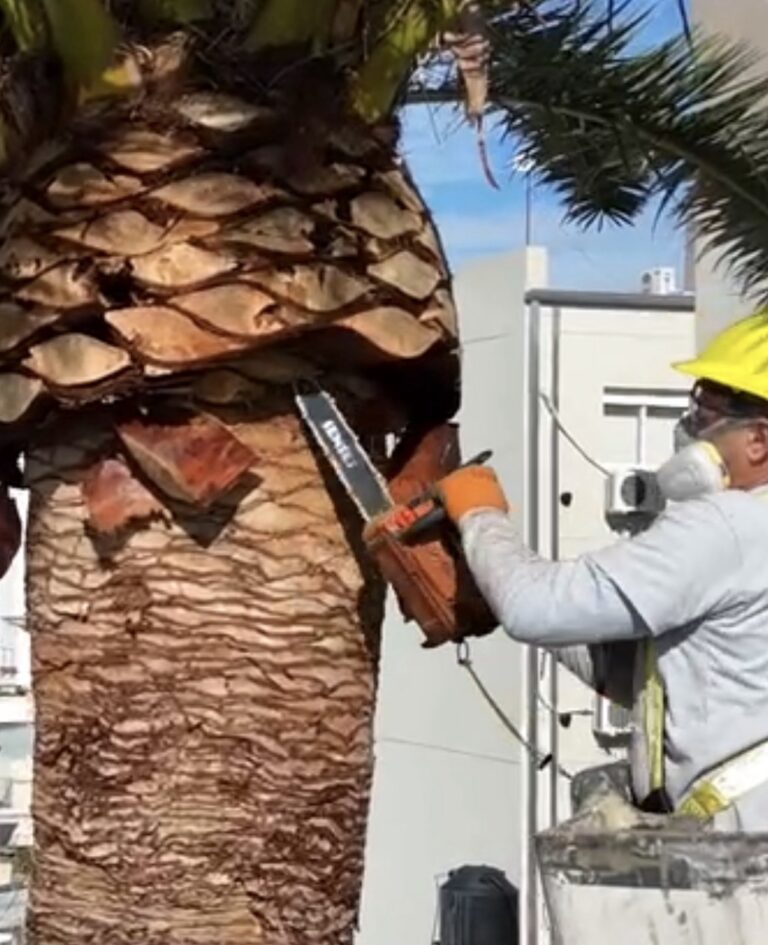 1Preparing the pineapple with a chainsaw (shaving)
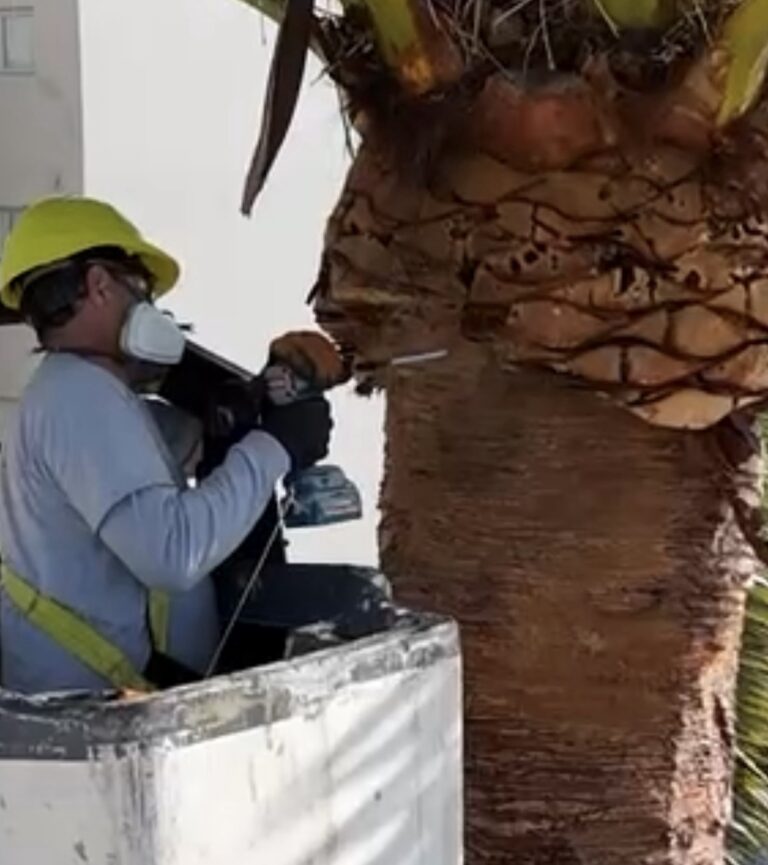 2Fitting the probe screw
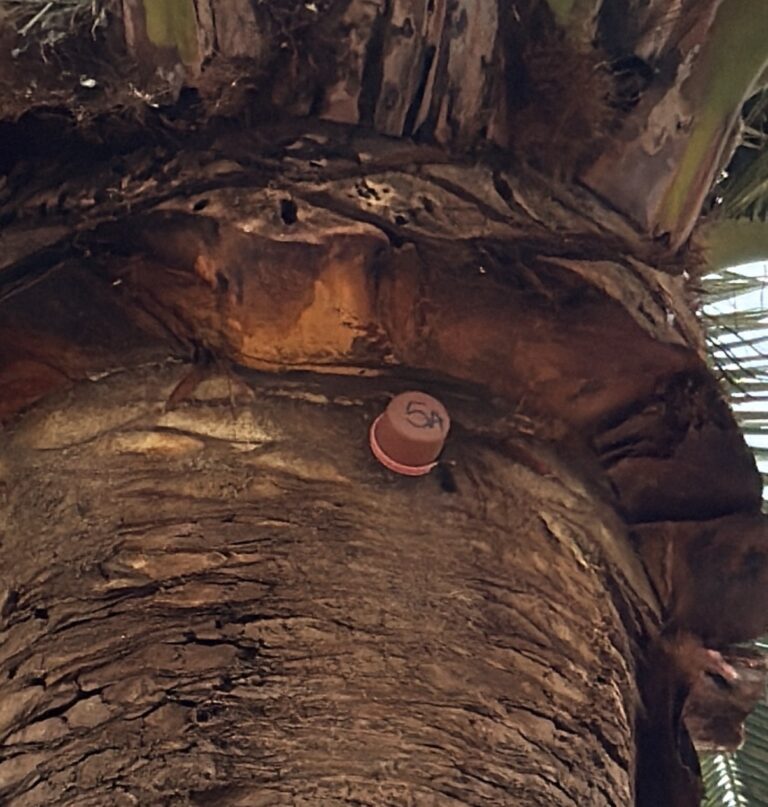 3Mounting the sensor on the probe
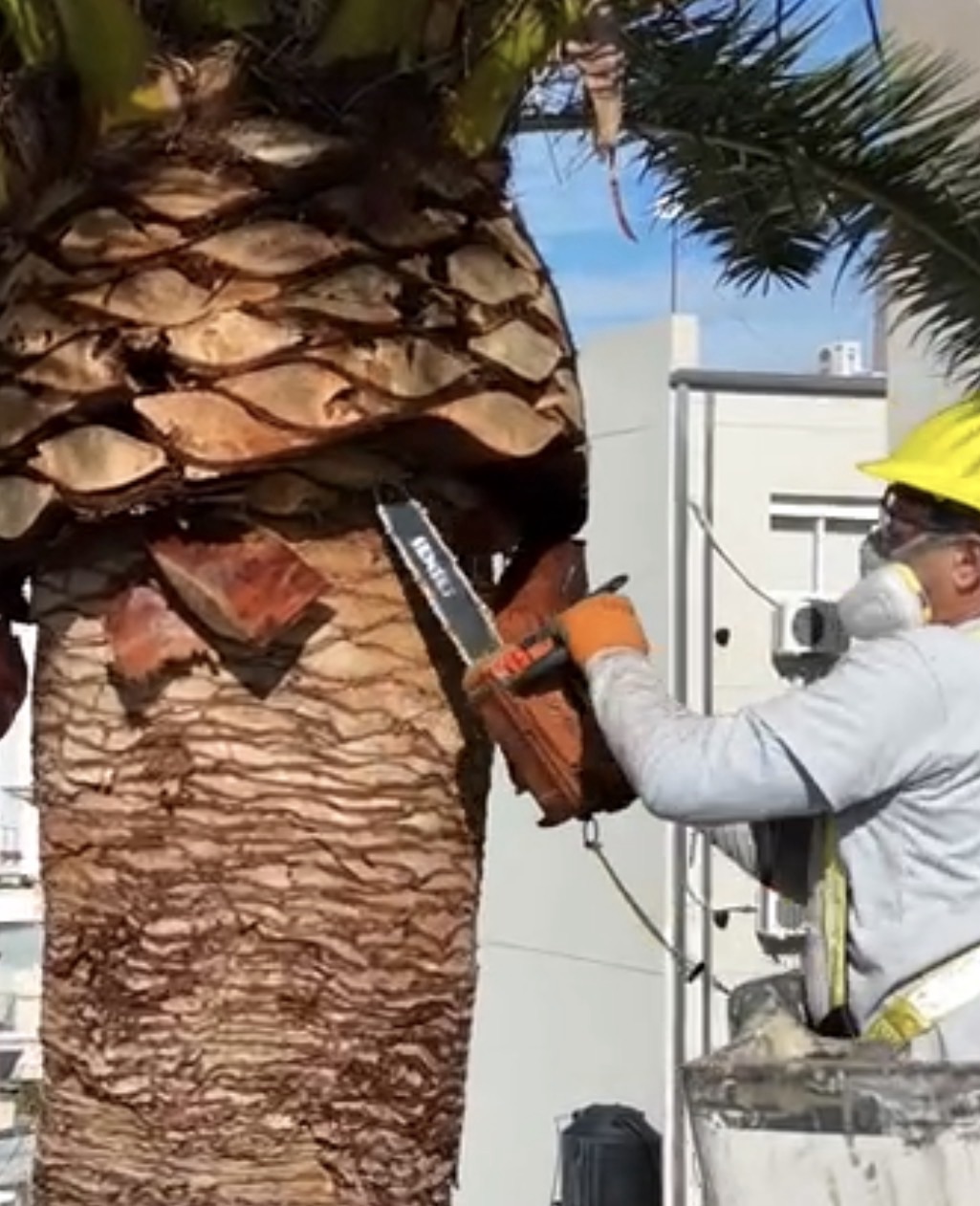
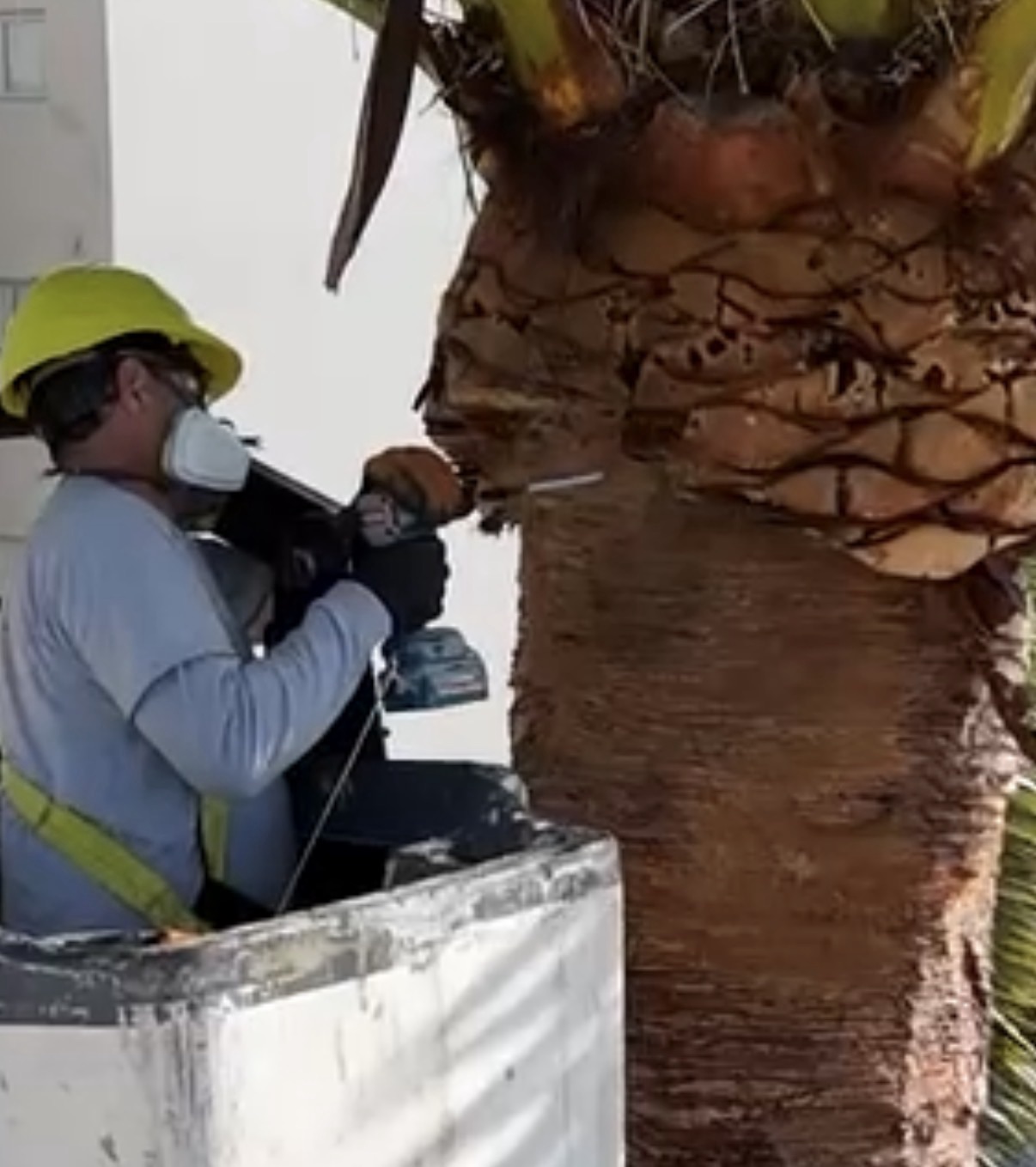
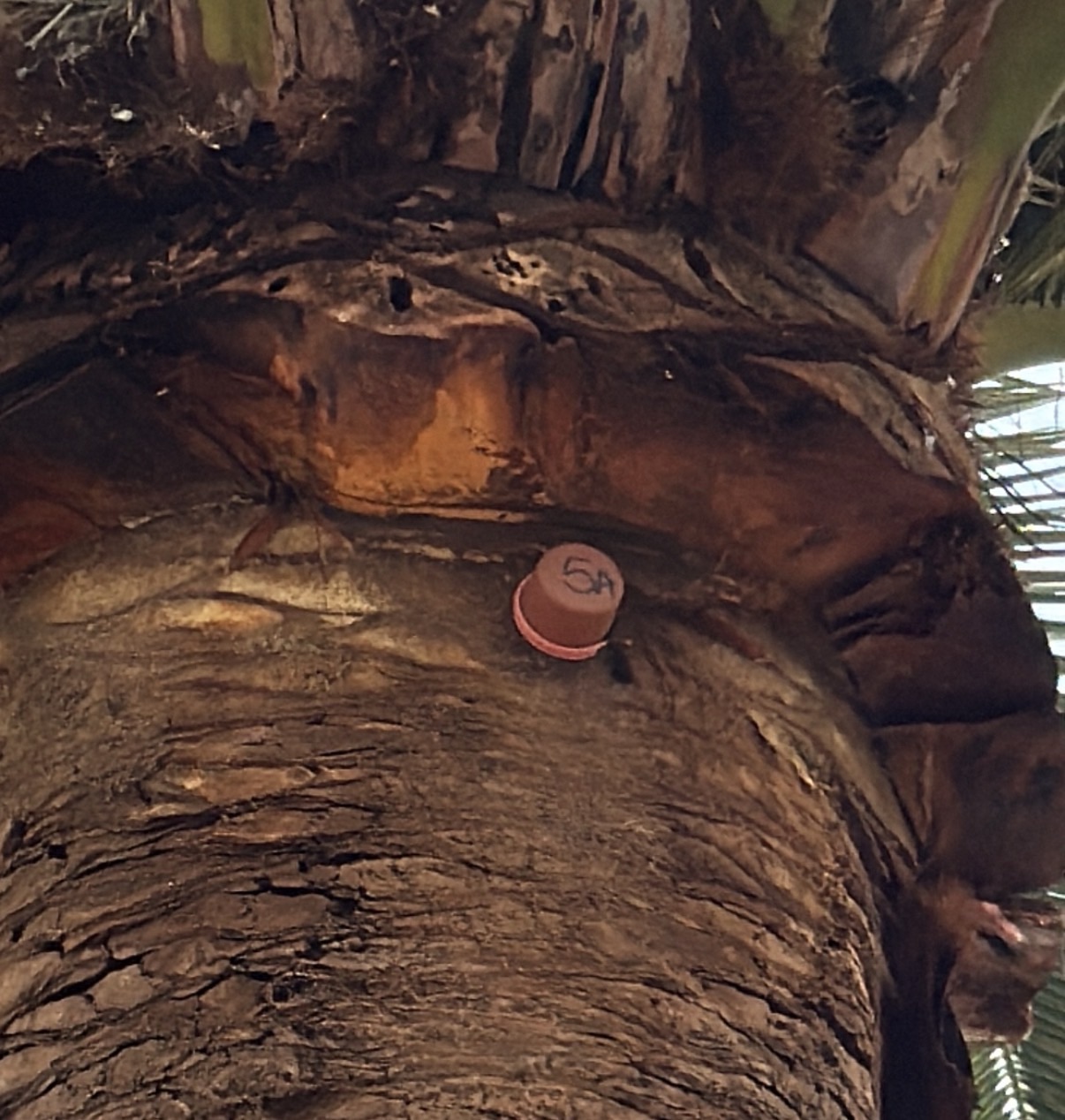
Field installations
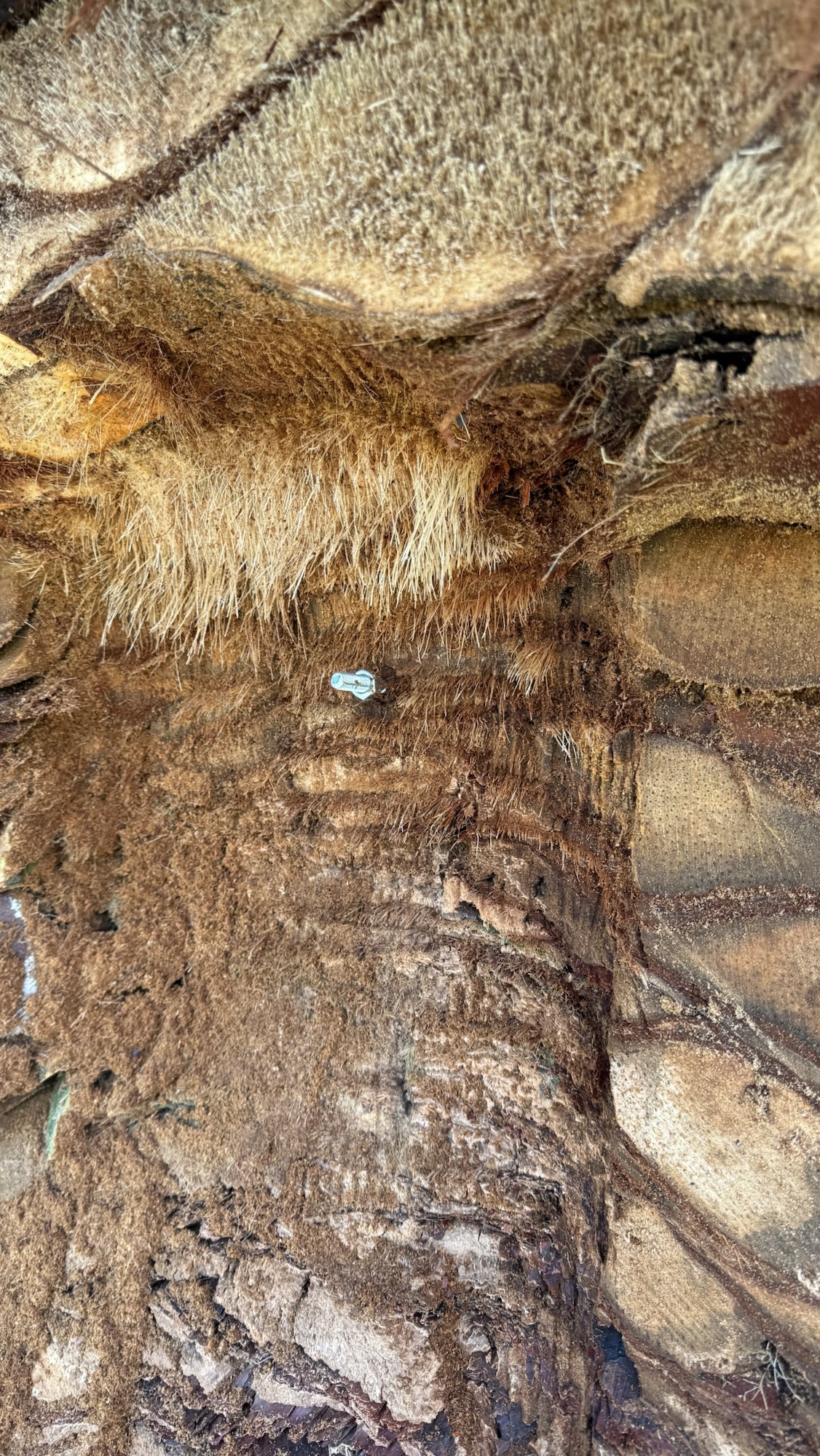
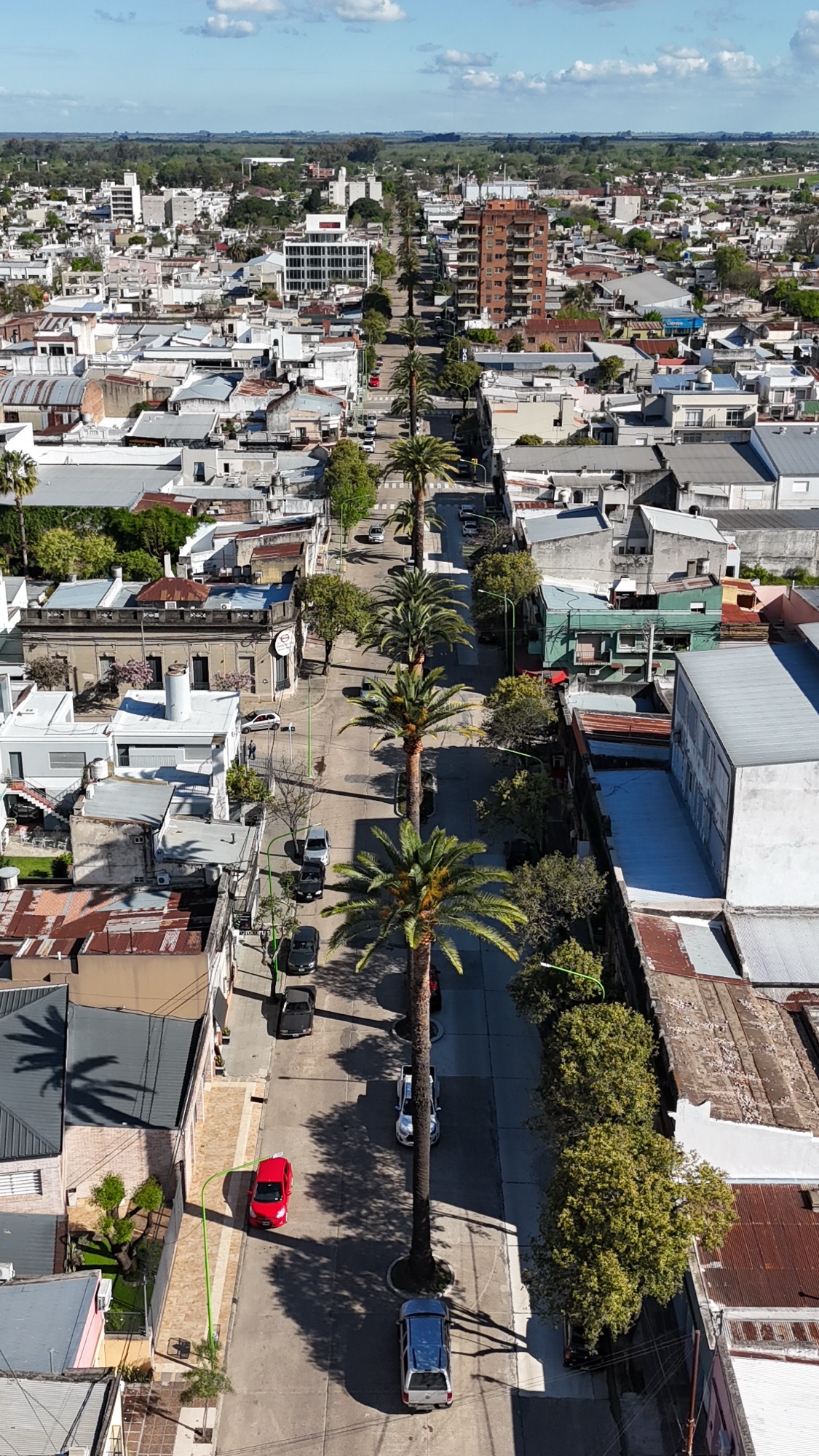
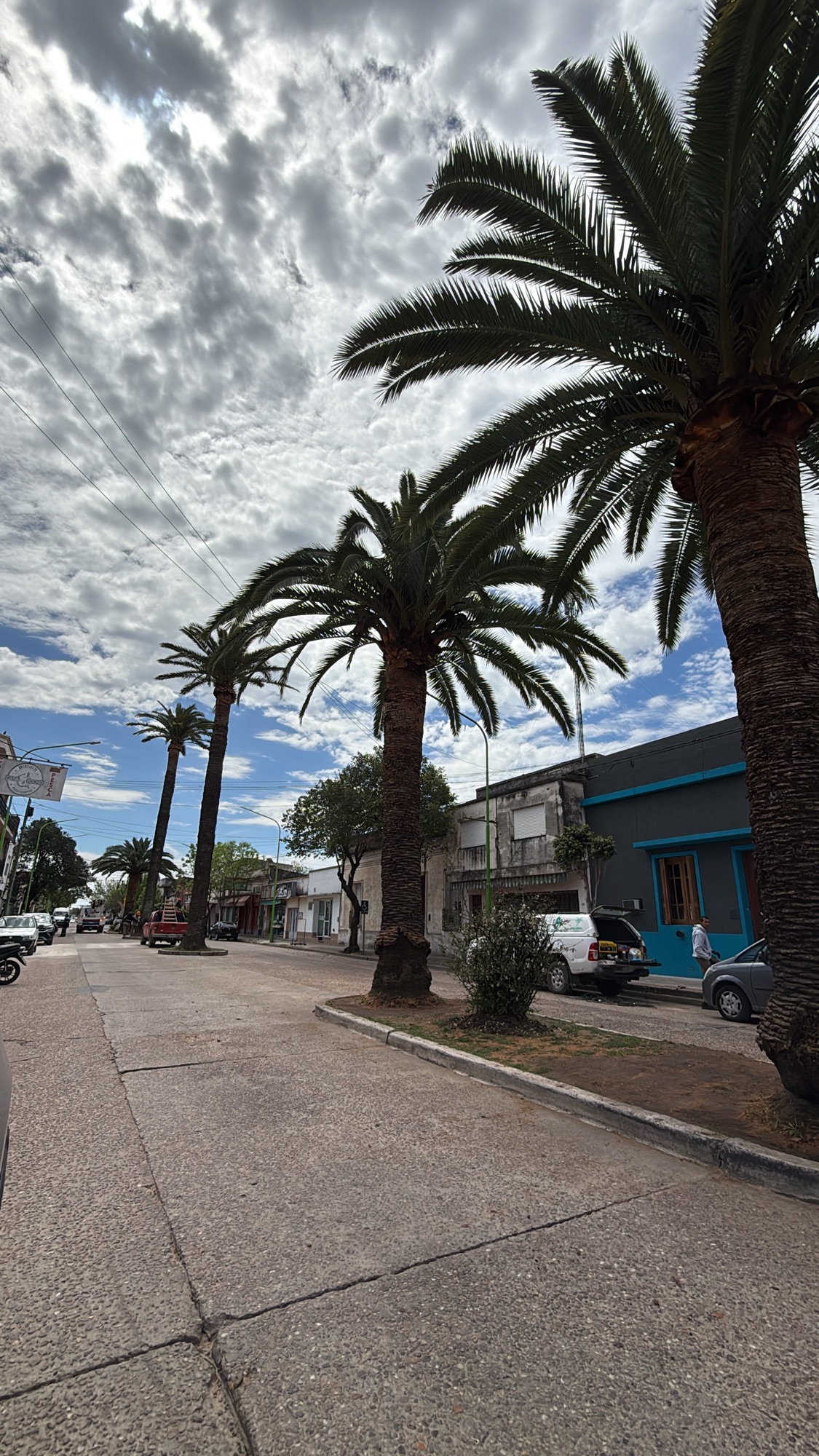
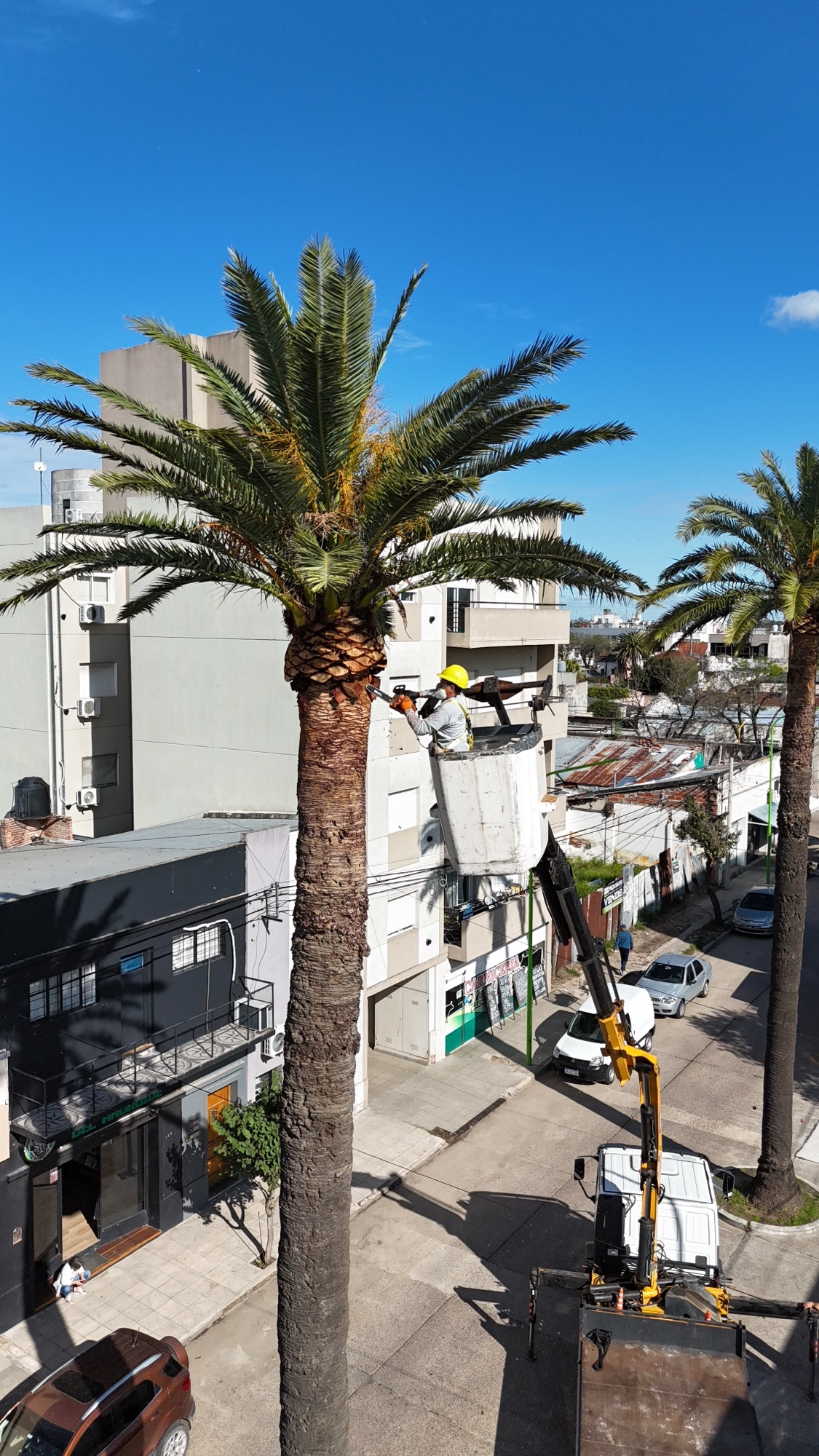
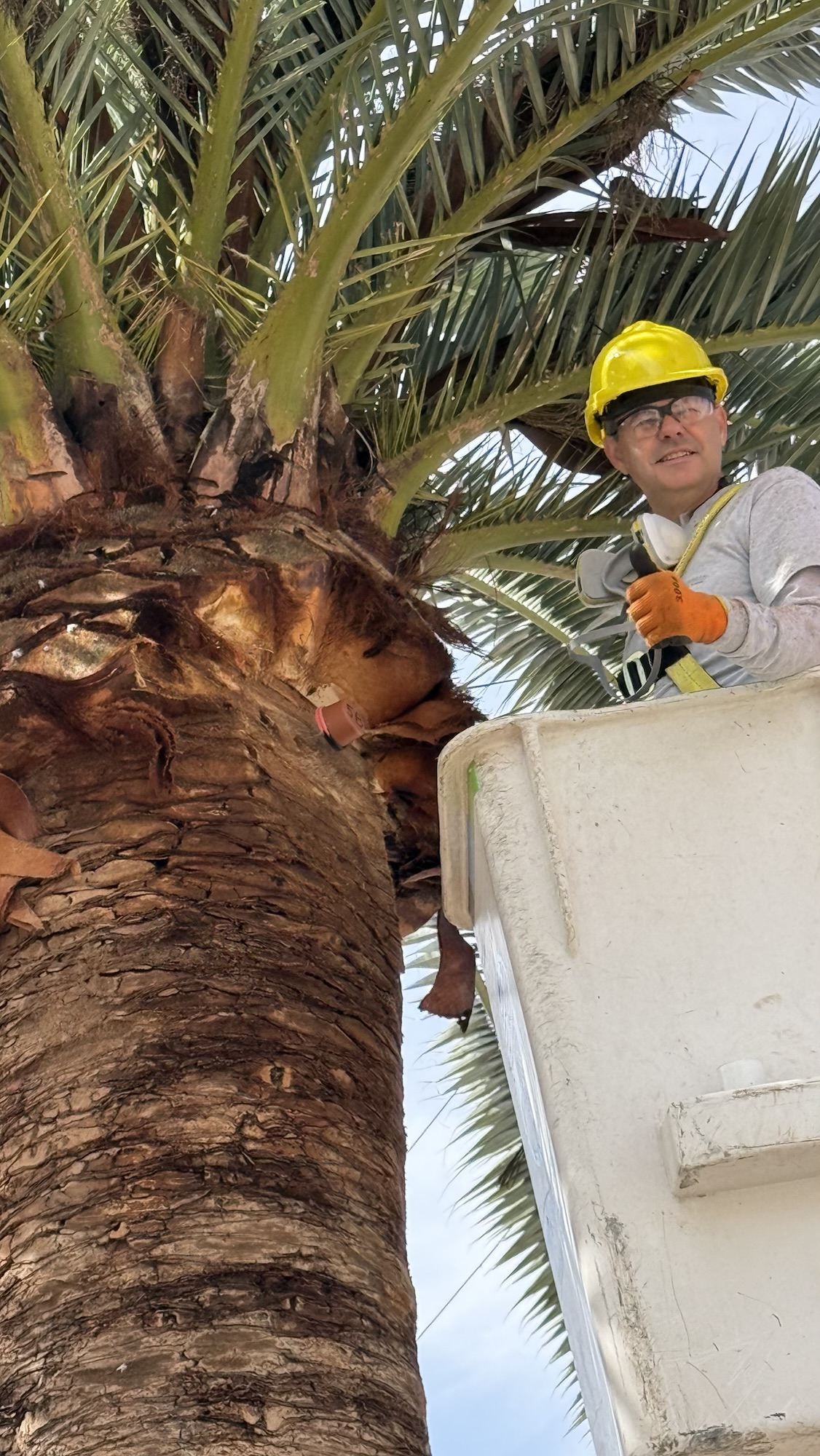
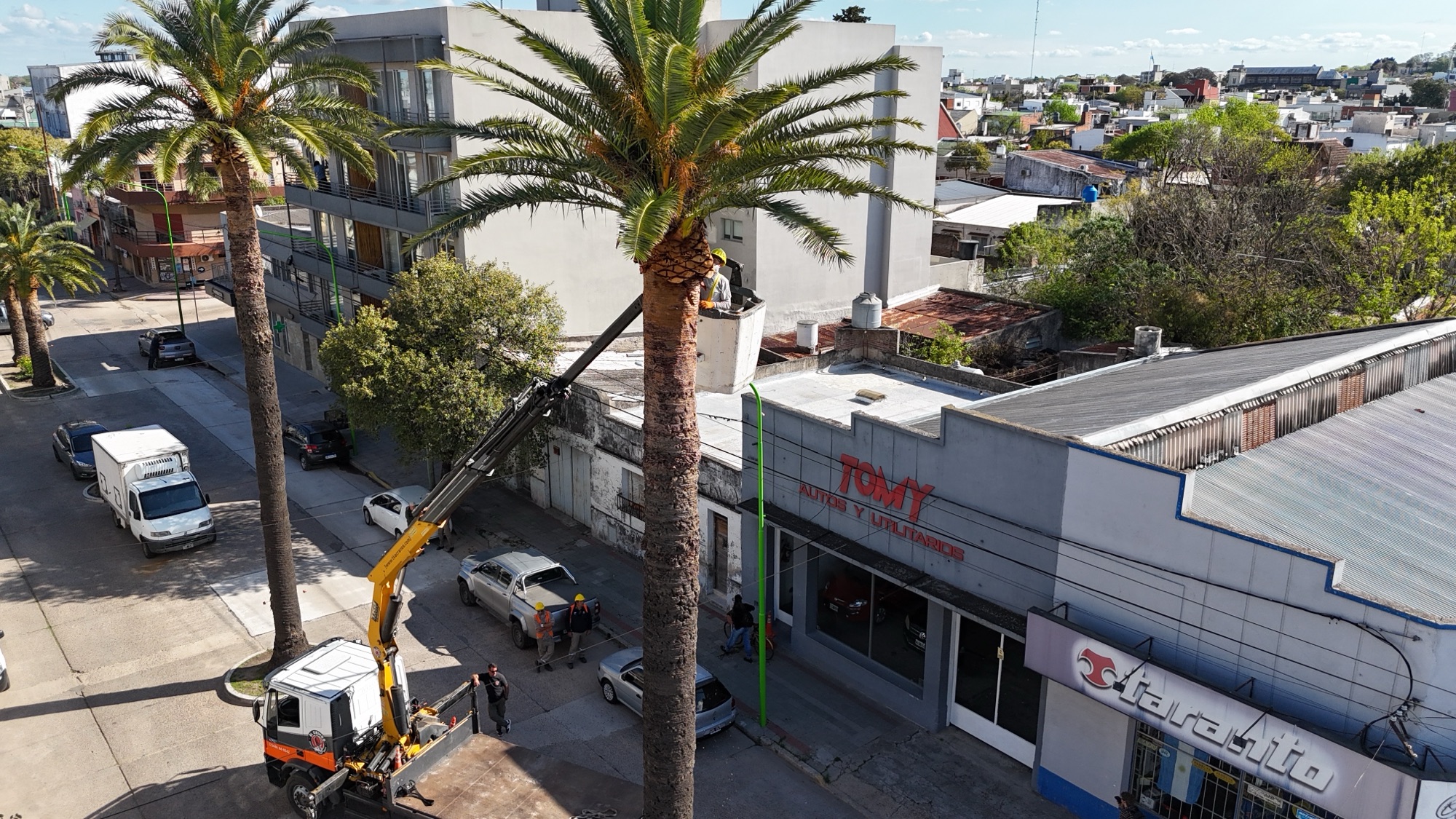
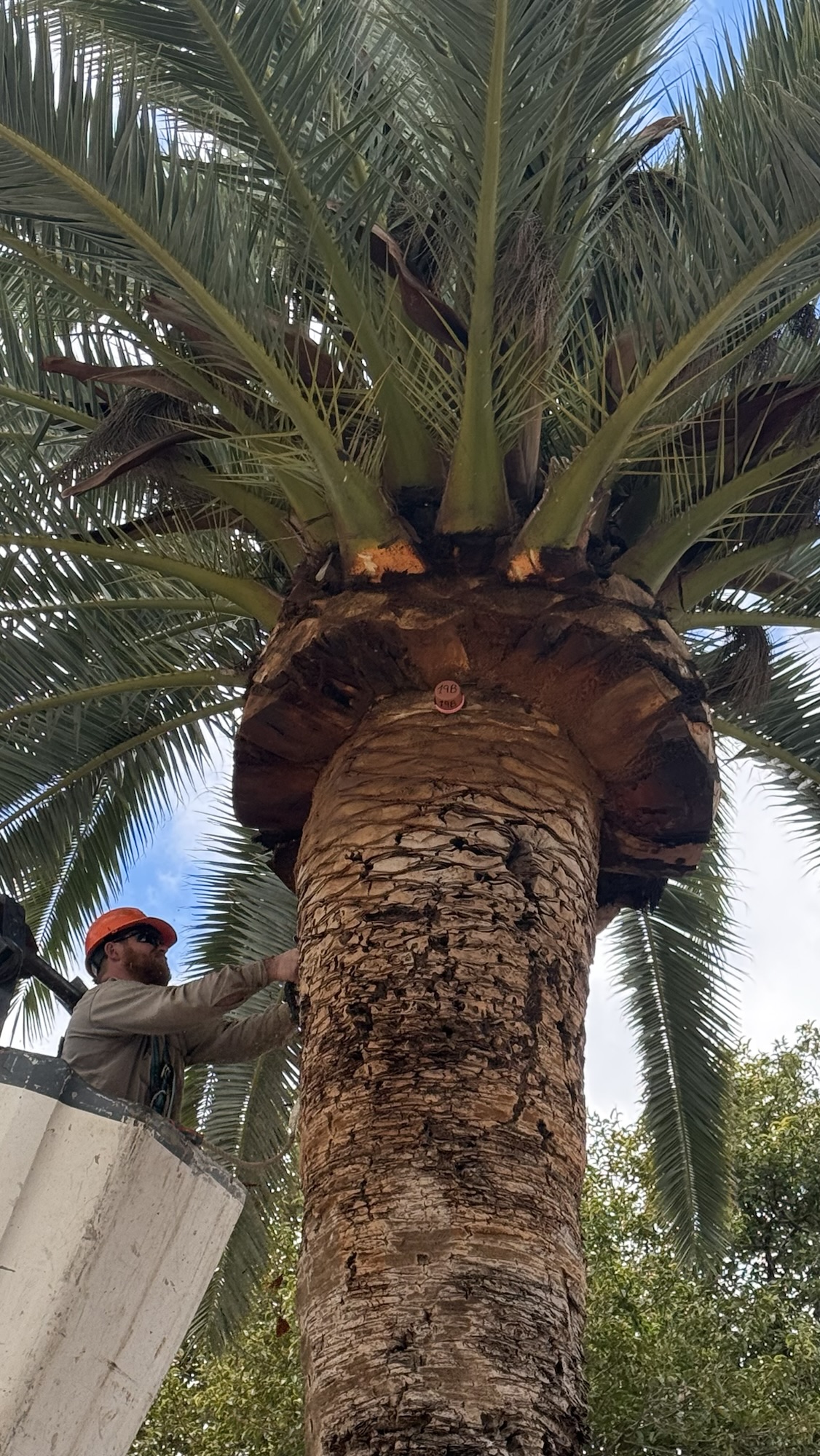
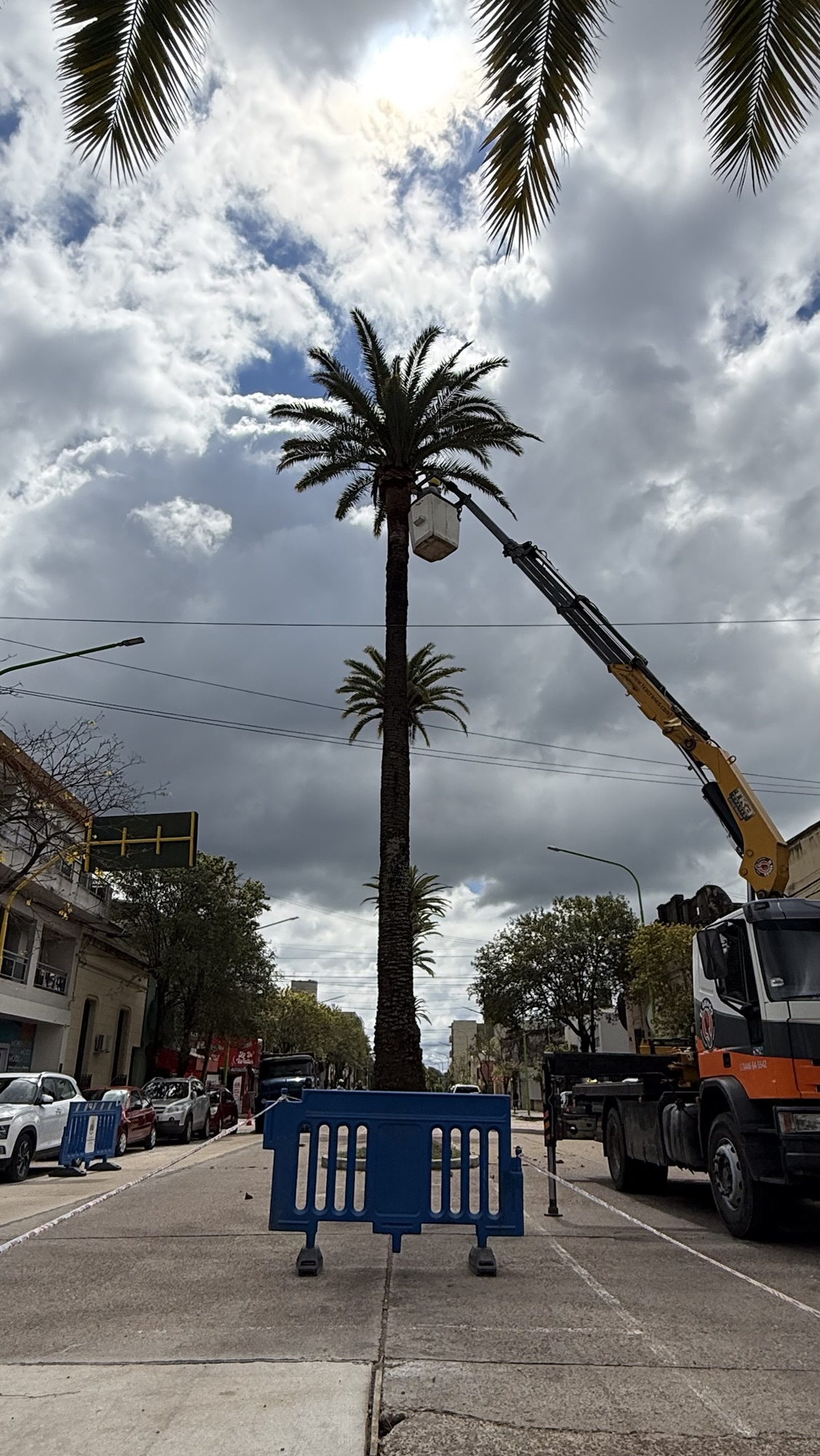
Wireless network between palms
IoTree uses BLE Mesh technology, a low-power Bluetooth network in which each device communicates with others located at a distance of up to 30 meters. This forms a network of connections that transmits information to the gateway, from where it is sent via 4G to the cloud platform.
Example of communication radius between sensors
30 m range
Sensors and repeaters have a BLE range of 30 m. If two devices are more than 30 m apart, a repeater is placed between them, which also has a 30 m range.
Close and in sight
It is a low-power signal: buildings, walls or very dense crowns between two devices reduce range. In those cases low-cost repeaters are added.
Up to 60 m from its neighbors
The gateway receives multiple sensors and repeaters located about 60 m away and supports up to 1,000 devices and communicates with the cloud via LTE/4G.
Repeaters at height
In the city each repeater needs a high point: pole, tree, lighting column or mast. Long chains can be assembled, but when specimens are very dispersed it is convenient to add gateways.
Nearby sites
We recommend installing an independent gateway in each plaza, park or avenue, even when nearby sites exist. This avoids excessively long repeater networks and promotes more stable and reliable communication.
Fully battery powered
Sensors, repeaters and gateways run on batteries. They need no power connection or civil works.
Power and connectivity
The "switchboard" or Gateway comes in a hermetic cabinet to place on wall or poles. It operates on battery and includes its own LTE/4G module.
| Sensor | 3.6 V, 8,500 mAh lithium battery · lasts about 3 years |
|---|---|
| Repeater | Same battery as the sensor · about 3 years |
| Gateway | Own battery · lasts up to 24 months · 4G LTE modem |
| Data SIM | One local LTE/4G SIM per gateway, provided by the municipality or the installer |
Battery replacement over 3 years
Approximate life; depends on the conditions at each site.
IoTree platform
A cloud platform with dedicated, patented algorithms that analyze each sensor's readings and classify the status of every palm. The municipality's technical team accesses it from a browser, with no software to install. The annual monitoring service includes access and support.
- Map with the health status of each specimen
- Automatic alerts when a palm changes status
- History of readings and interventions for each palm
- Exportable reports for technical and institutional records
- Access for several users: technicians, supervisors and authorities
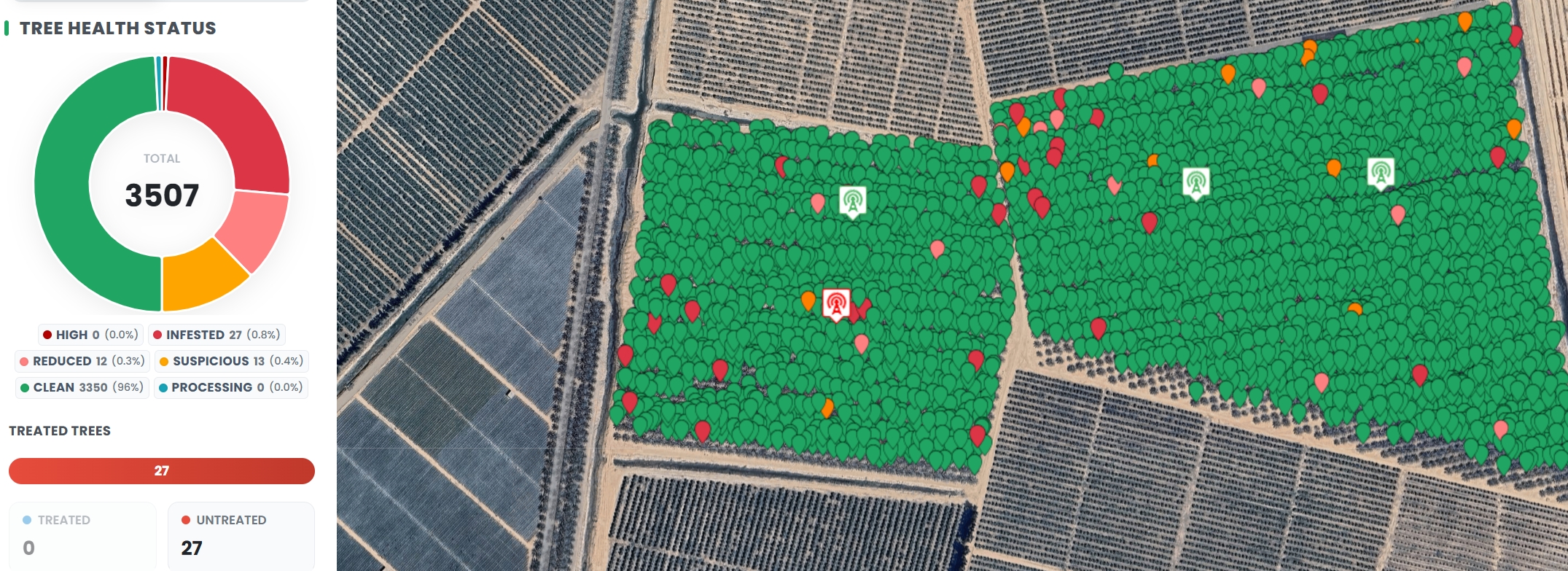
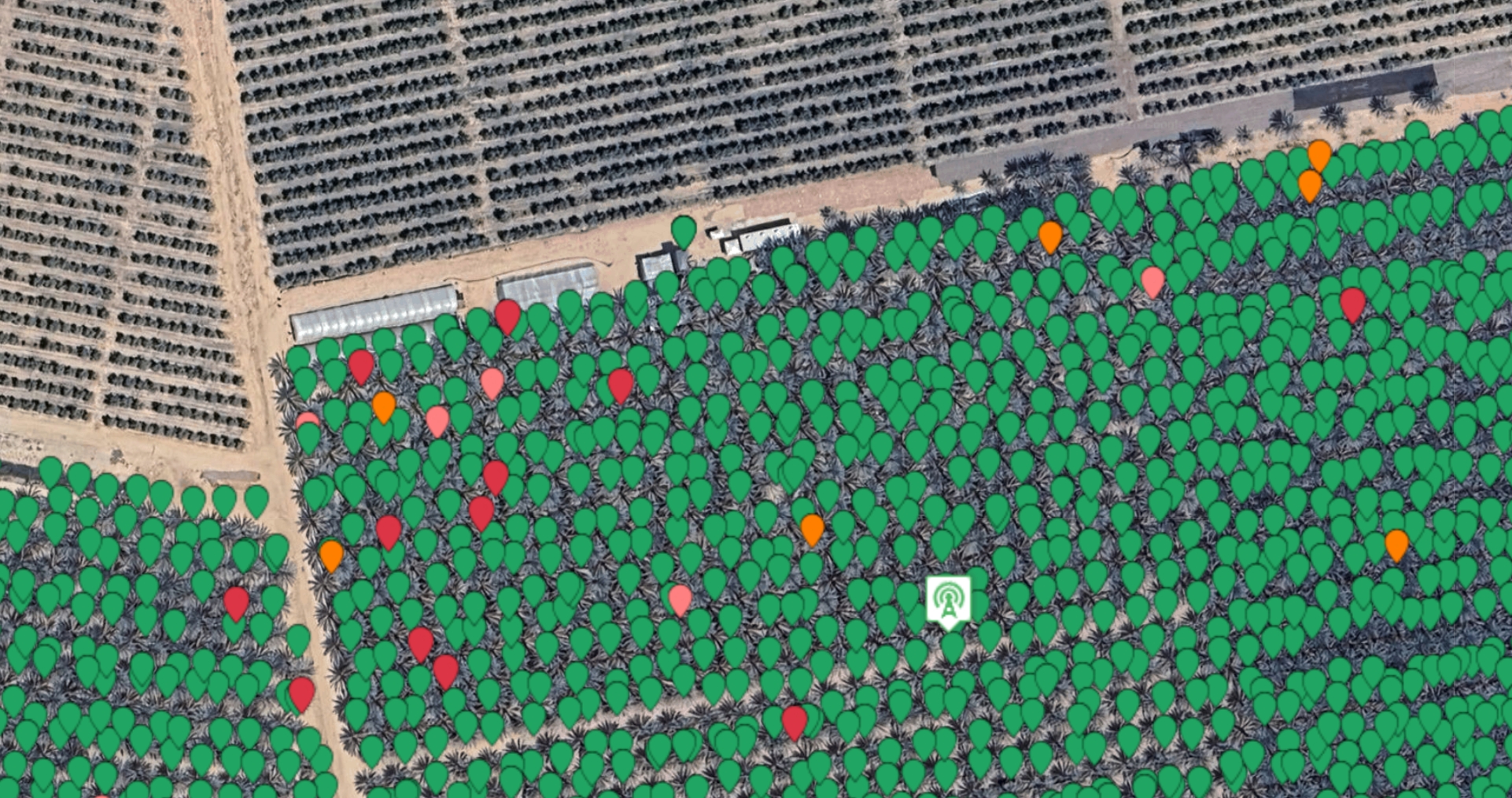
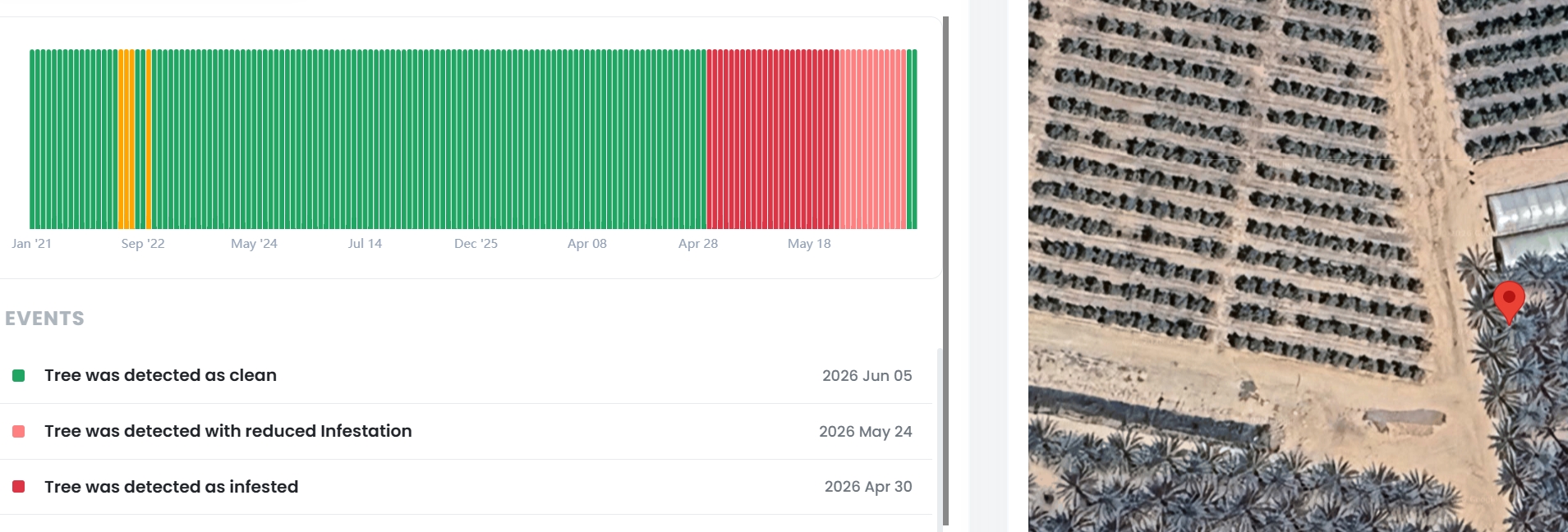
Click a screenshot to see it full size.
How we prepare the proposal
Since each municipality has different distributions and plantations of palms. We ask you to create sites (for example: plazas) and mark on the map the specimens of each site. The planner automatically suggests repeaters and gateways according to distances on the map, and with that information we prepare a proposal per site.
What the proposal includes
Devices and network
Sensors, repeaters and gateways, adjusted after the technical survey of each location.
Training for correct installation
We train and support your team to place the sensors at the top of the pineapple, set up the network and register the palms on the platform. Installation by Equitec is optional.
Annual monitoring
Platform, alerts and support. Contracts from 12 to 60 months.
How to use the Site Planner?
Loading the specimens on the satellite map in each public space under your care. Each plaza, park or avenue is loaded as a separate site. The planner suggests the sensors, repeaters and gateways for each site and, when finished, sends us the technical summary so we can prepare the final proposal.
Step 1
Add a site and search for it on the map. (Ex: "Plaza de Mayo")
Step 2
Mark each palm and save the site. (Try to differentiate between large and medium palms)
Step 3
Review the summary and send it.
Mark where the row starts.
Start with your first site
Add a square, park or avenue, find it on the map and mark its palms.
Preliminary plan calculated from the marked palms. Repeaters and gateways are a suggestion adjusted in the technical survey of each site.
What happens next
- We review each siteWe analyze the marked palms, the distances and the suggested network.
- We confirm the details of each siteWe review with your team the size of the palms, the obstacles and the high mounting points.
- We send you the proposalEquipment, training, monitoring and batteries, by site. Installation is quoted separately if you request it.
We received your request
We could not send the request from this page. Your plan is still saved. Send it by WhatsApp or email in two steps.
- Download both filesThe summary opens in any browser or phone. The map (KML) opens in Google Earth or Google Maps with each palm located.
- Send the message and attach the filesIn WhatsApp, tap the clip and choose "Document". The message already includes a Google Maps link for each site.
The tool was designed to make preliminary planning. The final quantity of equipment and accessories will be defined with a technical survey of each site. What you load is automatically saved in this browser until you send it. We recommend downloading sites in json format, to share or reuse in the future.
Frequently asked questions
Do the sensors replace inspection and treatments?
No. They provide information for better decisions: which palms to treat first, which ones responded to treatment and where pest pressure is concentrated. The professional assessment and the management plan remain with the municipality's technical team.
Do they need electricity or wiring?
No. Sensors, repeaters and gateways run on batteries and communicate wirelessly.
Who provides the gateway SIM?
Each gateway needs a local LTE/4G data SIM, provided by the municipality or the installer. As a reference, a prepaid data plan is enough.
Can one gateway serve two nearby squares?
In some cases yes, but we recommend one gateway per site. Sharing gateways may seem more economical, but requires extending the chain with repeaters between sites and causes a failure at one point to affect the connection of specimens and greater battery consumption.
How do I know how many repeaters I need?
If the distance between two devices exceeds 30 m, a repeater is needed, which also has a 30 m range. The planner suggests them from the distances between the palms you mark, and the field survey adjusts them for local obstacles such as buildings or dense crowns.
What about humidity and salt air?
The sensor has IP55 protection and a UV-resistant cover. Additionally, the electronics and battery connector are lacquered and protected precisely to prevent corrosion.
IoTree sensors by Agrint Sensing Solutions